Choosing a Bitcoin wallet isn’t just about downloading the most popular app. The wrong wallet can mean weak backups, limited fee control, fake-app risk, poor privacy, or more custody risk than you expected. The best Bitcoin wallet is the one that fits how you actually use BTC—not just the one with the cleanest interface.
How We Picked the Bitcoin Wallets in This List
This list focuses on active Bitcoin wallets with clear public information, working apps or devices, verifiable Bitcoin support, and a clear custody model. We prioritized wallets with practical security features, backup options, fee controls, hardware support, Lightning support, privacy tools, or strong Bitcoin-specific use cases.
We also looked at user fit. A beginner-friendly wallet isn’t always the safest long-term storage option, and the most secure cold storage setup isn’t always the easiest wallet for small payments. A Lightning wallet can be useful for daily BTC payments, but it may bring liquidity, channel, or custody trade-offs depending on how it works.
The ranking includes different wallet types: hardware wallets, mobile wallets, desktop wallets, Lightning wallets, privacy wallets, and multisig wallets. That makes the list more practical than ranking only hardware wallets or only mobile apps.
Learn more: What Is a Crypto Wallet?
Bitcoin Wallet Comparison Table
| Wallet | Best For | Custody | Main Strength | Main Risk |
| Ledger | Mainstream hardware storage | Self-custody | Hardware signing, broad app support | Closed-source trade-offs and recovery-service concerns |
| Trezor | Open-source hardware users | Self-custody | Transparent hardware wallet ecosystem | Users still need strong backup habits |
| COLDCARD | Advanced Bitcoin cold storage | Self-custody | Bitcoin-only, air-gapped signing | Steep learning curve |
| Sparrow Wallet | Advanced desktop users | Non-custodial | Coin control, multisig, hardware support | Not beginner-focused |
| Electrum | Technical Bitcoin users | Non-custodial | Proven lightweight Bitcoin wallet | Phishing and server-trust risks |
| BlueWallet | Mobile Bitcoin users | Non-custodial on-chain | Simple mobile BTC wallet with advanced tools | Lightning setup can vary |
| Phoenix | Lightning payments | Self-custodial | Simple Lightning with automatic channels | Lightning fees and liquidity limits |
| Muun | Beginner Bitcoin + Lightning use | Self-custodial | Simple mobile payment flow | Not ideal for deep cold storage |
| Wasabi Wallet | Privacy-focused desktop users | Non-custodial | Tor, CoinJoin, coin control | Privacy tools can be misunderstood |
| Nunchuk | Multisig and inheritance | Non-custodial multisig | Flexible multisig setup | More setup complexity |
Bitcoin Wallet Types in Brief
- Hardware wallets: These store private keys on a separate device and sign transactions away from your everyday phone or computer. Ledger, Trezor, and COLDCARD are examples.
- Mobile wallets: These are better for everyday use, smaller balances, and quick payments. BlueWallet, Phoenix, and Muun are stronger fits here.
- Desktop wallets: These give users more control over fees, privacy, servers, and hardware wallet setups. Sparrow, Electrum, and Wasabi are examples.
- Lightning wallets: These support faster BTC payments over the Lightning Network. Phoenix and Muun are self-custodial options, while custodial Lightning wallets are easier but require more trust.
- Multisig wallets: These require more than one key to move funds. Nunchuk and Sparrow can be useful for users who want stronger backup, inheritance, or shared-control setups.
Read more: Crypto Wallet Types for Beginners
1. Ledger
Type: Hardware wallet and companion app
Best for: Long-term BTC storage, mainstream hardware wallet users
Custody: Self-custody
Bitcoin support: Multi-asset wallet with Bitcoin support
Platforms: Ledger hardware devices, Ledger Wallet app, desktop and mobile
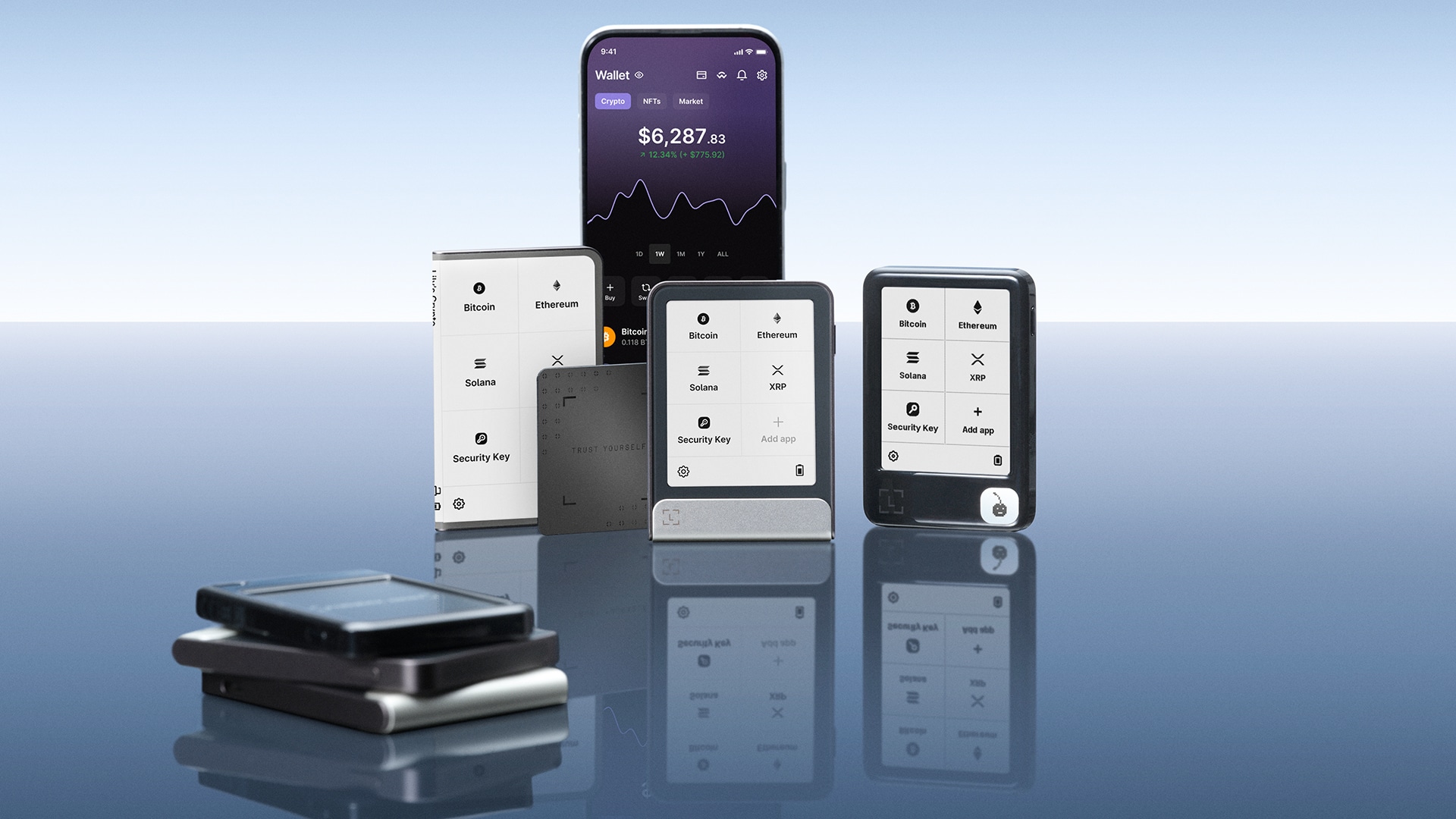
Ledger is one of the most recognizable hardware wallet ecosystems. It may suit users who want a dedicated signing device, a polished companion app, and support for Bitcoin alongside many other crypto assets. Ledger says its hardware wallets keep private keys offline, and its supported-assets page lists Bitcoin and compatibility with third-party wallets such as Electrum.
The main advantage is convenience. Users can manage BTC through Ledger Wallet, connect to other wallet software, and keep private keys off a normal internet-connected device. That makes Ledger a practical option for long-term holders who want hardware security without building a very technical setup.
The drawback is trust. Ledger is not a Bitcoin-only wallet, and parts of the ecosystem are more closed than open-source-focused users may prefer. Ledger’s optional recovery products can also be controversial among users who don’t want identity-linked or service-assisted recovery around a hardware wallet.
Ledger may suit users who want a mainstream hardware wallet with broad support. It’s less ideal if you want a Bitcoin-only, fully open-source, air-gapped setup.
Read more: What Is an Air-Gapped Wallet?
2. Trezor

Type: Hardware wallet and Trezor Suite app
Best for: Open-source hardware wallet users
Custody: Self-custody
Bitcoin support: Multi-asset wallet with Bitcoin support
Platforms: Trezor device, Trezor Suite desktop and web
Trezor is another leading hardware wallet option, especially for users who care about open-source design. Trezor describes its hardware and software ecosystem as open source, and Trezor Suite is the official app for managing a Trezor hardware wallet.
The biggest strength is transparency. Trezor may suit users who want a hardware wallet with a strong reputation, a clear recovery phrase model, and a less intimidating setup than more advanced Bitcoin-only devices. It can be a good fit for long-term BTC storage, especially when users understand seed phrase backups and address verification.
The drawback is that Trezor still depends on the user doing the basics correctly. A hardware wallet doesn’t help if the recovery phrase is photographed, typed into a fake website, stored in cloud notes, or lost. Some Bitcoin-only users may also prefer a device focused only on BTC.
Trezor may suit users who want a reputable, open-source-friendly hardware wallet. It’s less ideal if you want maximum Bitcoin-only cold storage features.
3. COLDCARD

Type: Bitcoin-only hardware signing device
Best for: Advanced Bitcoin cold storage
Custody: Self-custody
Bitcoin support: Bitcoin-only
Platforms: Hardware device used with compatible software wallets
COLDCARD is a Bitcoin-only hardware wallet made by Coinkite. Its official site describes it as a Bitcoin-only signing device with dual secure elements, fully air-gapped signing, and open-source firmware.
The main appeal is focus. COLDCARD is built for users who want a dedicated Bitcoin storage setup rather than a broad crypto wallet. It works well with PSBT-based workflows and can be paired with wallets such as Sparrow or Electrum for more advanced transaction control.
The drawback is usability. COLDCARD isn’t the easiest wallet for someone buying their first small amount of BTC. Users need to understand backups, passphrases, address verification, firmware updates, and how their desktop wallet connects to the signing device.
COLDCARD may suit advanced Bitcoin holders who want a Bitcoin-only cold storage setup. It’s not the best first wallet for beginners.
4. Sparrow Wallet

Type: Desktop Bitcoin wallet
Best for: Advanced desktop users, hardware wallet users, privacy-conscious users
Custody: Non-custodial
Bitcoin support: Bitcoin-only
Platforms: Windows, macOS, Linux
Sparrow Wallet is a desktop Bitcoin wallet built for users who want control. It supports single-signature and multisig wallets, public servers, Bitcoin Core, private Electrum servers, PSBT workflows, common hardware wallets, coin control, fee control, and transaction labeling.
The main strength is depth. Sparrow can be useful if you want to connect a hardware wallet, manage UTXOs, avoid unnecessary address reuse, build multisig, or use your own Bitcoin node. It’s one of the stronger options for users who want more than a simple send-and-receive wallet.
The drawback is that Sparrow asks more from the user. It’s not as simple as a mobile wallet, and privacy depends heavily on how it’s configured. Connecting to a public server is easier, but using your own node or private server is better for privacy.
Sparrow may suit users who want a serious desktop Bitcoin wallet. It’s less ideal for casual mobile payments or people who don’t want to learn Bitcoin transaction details.
5. Electrum

Type: Desktop and Android Bitcoin wallet
Best for: Technical Bitcoin users
Custody: Non-custodial
Bitcoin support: Bitcoin-only
Platforms: Desktop and Android
Electrum is one of the oldest active Bitcoin wallets. Its official site highlights SPV verification, cold storage, multisig, plugins, and hardware wallet support, including Ledger, Trezor, and KeepKey.
The biggest advantage is maturity. Electrum is lightweight, fast, and flexible. It can work well for users who want hardware wallet support, offline signing, watch-only wallets, multisig, and more technical control than a simple mobile wallet provides.
The main drawback is phishing risk and usability. Electrum users should be careful to download only from official sources, because fake wallet sites and malicious downloads have been a recurring risk across crypto. The interface can also feel dated compared with newer wallets.
Electrum may suit technical users who want a proven Bitcoin wallet. It’s less ideal if you want a beginner-friendly interface or a polished mobile-first experience.

How to Get Free Crypto
Simple tricks to build a profitable portfolio at zero cost

6. BlueWallet

Type: Mobile Bitcoin wallet
Best for: Mobile Bitcoin users, watch-only wallets, beginners moving into self-custody
Custody: Non-custodial for on-chain BTC
Bitcoin support: Bitcoin-only
Platforms: iOS and Android
BlueWallet is a mobile Bitcoin wallet with a simple interface and several advanced features under the surface. Its official site highlights watch-only wallets, multisig vaults, fee control, transaction bumping, canceling, batching, and the ability to connect Lightning through a user’s own node.
The main strength is balance. BlueWallet can work for beginners who want a straightforward mobile Bitcoin wallet, but it also has tools that more experienced users care about, such as watch-only wallets and multisig vaults.
The drawback is that Lightning support needs careful handling. BlueWallet’s on-chain Bitcoin wallet is self-custodial, but Lightning setups can depend on external infrastructure or a user’s own node. Users should understand what setup they’re using before storing meaningful funds.
BlueWallet may suit mobile users who want a simple Bitcoin wallet with room to grow. It’s less ideal if you want the easiest self-custodial Lightning wallet out of the box.
7. Phoenix

Type: Mobile Bitcoin and Lightning wallet
Best for: Self-custodial Lightning payments
Custody: Self-custodial
Bitcoin support: Bitcoin-only
Platforms: iOS and Android
Phoenix is a self-custodial Bitcoin wallet that runs natively on Lightning. Phoenix’s official site says it lets users send and receive Bitcoin while keeping control of the key, and its support pages explain that the wallet automatically manages Lightning channels in the background.
The main strength is ease of use. Phoenix hides much of the channel-management work that makes Lightning difficult for beginners, while still giving users key control. That makes it useful for small BTC payments, Lightning invoices, and everyday spending.
The drawback is that Lightning isn’t the same as simple on-chain cold storage. Users still need to understand backups, liquidity, routing, and fees. Phoenix may also be less suitable for users who only want to hold BTC for years without making payments.
Phoenix may suit users who want a practical self-custodial Lightning wallet. It’s less ideal as a primary cold storage wallet for large balances.
8. Muun

Type: Mobile Bitcoin and Lightning wallet
Best for: Beginner-friendly Bitcoin and Lightning payments
Custody: Self-custodial
Bitcoin support: Bitcoin-only
Platforms: iOS and Android
Muun is a mobile Bitcoin and Lightning wallet focused on simplicity. Its official site describes it as a self-custodial wallet for Bitcoin and Lightning, and its Emergency Kit documentation explains the wallet’s recovery model.
The main advantage is the user experience. Muun makes on-chain and Lightning payments feel more similar, which can be useful for people who want to send and receive BTC without learning channel management first.
The drawback is that Muun’s design is still a payment-wallet design, not a deep cold storage setup. Users should understand the recovery model, keep the Emergency Kit safe, and avoid treating a mobile wallet like a vault for large BTC balances.
Muun may suit beginners who want a simple self-custodial Bitcoin wallet with Lightning support. It’s less ideal for advanced users who want full node control, coin control, or hardware cold storage.
9. Wasabi Wallet

Type: Desktop privacy Bitcoin wallet
Best for: Privacy-focused Bitcoin users
Custody: Non-custodial
Bitcoin support: Bitcoin-only
Platforms: Windows, macOS, Linux
Wasabi is a desktop Bitcoin wallet focused on privacy. Its official site describes it as an open-source, non-custodial Bitcoin wallet with built-in Tor support, client-side block filtering, and coin control features.
The main strength is privacy tooling. Wasabi can be useful for users who understand Bitcoin transaction history, address reuse, UTXOs, and why metadata matters. It gives more control than a basic wallet and is better suited to users who specifically care about transaction privacy.
The drawback is that privacy tools don’t make Bitcoin anonymous. They can be misunderstood, may create exchange-compliance friction, and require users to learn what the wallet is actually doing. Wasabi is also desktop-focused, so it’s not the right fit for casual mobile payments.
Wasabi may suit privacy-focused Bitcoin users. It’s less ideal for beginners who only need a simple wallet to receive and hold BTC.
10. Nunchuk

Type: Bitcoin multisig wallet
Best for: Multisig, inheritance, family or team storage
Custody: Non-custodial multisig
Bitcoin support: Bitcoin-only
Platforms: Mobile and desktop
Nunchuk is a Bitcoin wallet focused on multisig and long-term planning. Its official site highlights multisig, hardware wallet support, decoy wallets, coin control, emergency lockdown features, and inheritance planning.
The main strength is reducing single points of failure. A well-designed multisig setup can help users avoid depending on one device, one seed phrase, or one location. That can be useful for families, businesses, inheritance planning, or users holding larger BTC balances.
The drawback is complexity. Multisig can become dangerous if users lose track of keys, wallet configuration files, backup locations, or recovery instructions. A bad multisig setup can be harder to recover than a simple single-seed wallet.
Nunchuk may suit users who want structured Bitcoin storage and are willing to learn multisig. It’s less ideal for small balances or quick everyday payments.
How to Choose and Use a Bitcoin Wallet Safely
- Decide whether you want custody or self-custody. Custodial wallets are easier, but the platform controls the funds. Non-custodial wallets give you control, but you’re responsible for backups.
- Match the wallet to the amount. A mobile wallet can be useful for small payments. A hardware wallet or multisig setup may be better for larger long-term holdings.
- Check the official website and app listing. Fake wallet apps, cloned websites, phishing ads, and fake support accounts are common in crypto. Security researchers have also reported fake wallet apps that imitate trusted products and try to steal seed phrases.
- Back up your recovery phrase offline. Don’t screenshot it, upload it, email it, or type it into websites.
- Test with a small amount first. Send a small BTC transaction before moving a larger balance.
- Learn fee controls. Bitcoin fees change with network demand, and wallets with RBF, CPFP, batching, or manual fee settings can give users more control.
- Don’t treat Lightning like cold storage. Lightning wallets are useful for small, fast payments, but they can involve liquidity limits, routing issues, channel costs, or custody trade-offs.
- Use hardware wallets carefully. Buy from trusted sources, verify wallet addresses on the device screen, and keep recovery phrases separate from the device.
- Think about privacy early. Address reuse, public servers, exchange withdrawals, KYC links, and careless UTXO management can all leak information.
Read more: Custodial vs. Non-Custodial Wallets
Final Thoughts
There’s no single best Bitcoin wallet for everyone. Ledger and Trezor are strong mainstream hardware options, COLDCARD is better for advanced Bitcoin-only cold storage, Sparrow and Electrum give more desktop control, and Phoenix or Muun may suit Lightning users. The right choice depends on how much BTC you hold, how often you spend, and how comfortable you are managing your own security.
FAQ
What is the best Bitcoin wallet in 2026?
The best Bitcoin wallet depends on your needs. Ledger, Trezor, COLDCARD, Sparrow, BlueWallet, Phoenix, and Muun are all strong options for different user types.
What is the safest Bitcoin wallet?
No Bitcoin wallet is completely safe. Hardware wallets like Ledger, Trezor, and COLDCARD can improve security, but users still need to protect recovery phrases and verify transactions.
What is the best Bitcoin wallet for beginners?
BlueWallet and Muun may suit beginners who want a simple mobile wallet. Ledger or Trezor may suit beginners who want hardware storage and are ready to learn backups.
What is the best Bitcoin wallet for long-term storage?
Hardware wallets such as Ledger, Trezor, and COLDCARD are better suited for long-term BTC storage. Larger holders may also consider multisig with a wallet like Nunchuk or Sparrow.
What is the best Bitcoin Lightning wallet?
Phoenix and Muun are strong self-custodial Lightning options. Wallet of Satoshi is very simple, but users should understand its custody model before storing funds there.
Are Bitcoin wallets free?
Software wallets are usually free to download. Hardware wallets cost money, and all Bitcoin users may still pay network fees when sending BTC.
Is a Bitcoin wallet the same as an exchange account?
No, an exchange account is usually custodial, while a non-custodial Bitcoin wallet lets you control the private keys.
Should I keep Bitcoin on an exchange?
Keeping BTC on an exchange can be convenient for trading, but it adds custodial risk. For long-term holding, self-custody may be safer if you know how to secure your wallet.
Can I lose Bitcoin from a wallet?
Yes, users can lose BTC through seed phrase loss, phishing, malware, fake apps, wrong addresses, device failure, or poor backup practices.
Do Bitcoin wallets support other coins?
Some do, and some don’t. Ledger and Trezor support many assets, while COLDCARD, Sparrow, Electrum, BlueWallet, Phoenix, Muun, Wasabi, and Nunchuk are focused on Bitcoin.
Disclaimer: Please note that the contents of this article are not financial or investing advice. The information provided in this article is the author’s opinion only and should not be considered as offering trading or investing recommendations. We do not make any warranties about the completeness, reliability and accuracy of this information. The cryptocurrency market suffers from high volatility and occasional arbitrary movements. Any investor, trader, or regular crypto users should research multiple viewpoints and be familiar with all local regulations before committing to an investment.