Choosing an Ethereum wallet feels simple until one bad click can drain your tokens. You need something easy enough for daily swaps, NFTs, and dApps, but secure enough to trust with real money. Balancing that is difficult. Some wallets trade safety for speed, while others protect your keys but make every action slower.
Here’s how the top Ethereum wallets compare in 2026 and what each one gets right or wrong.
Wallet Types and What They Mean
These are the main types of crypto wallets you should know about:
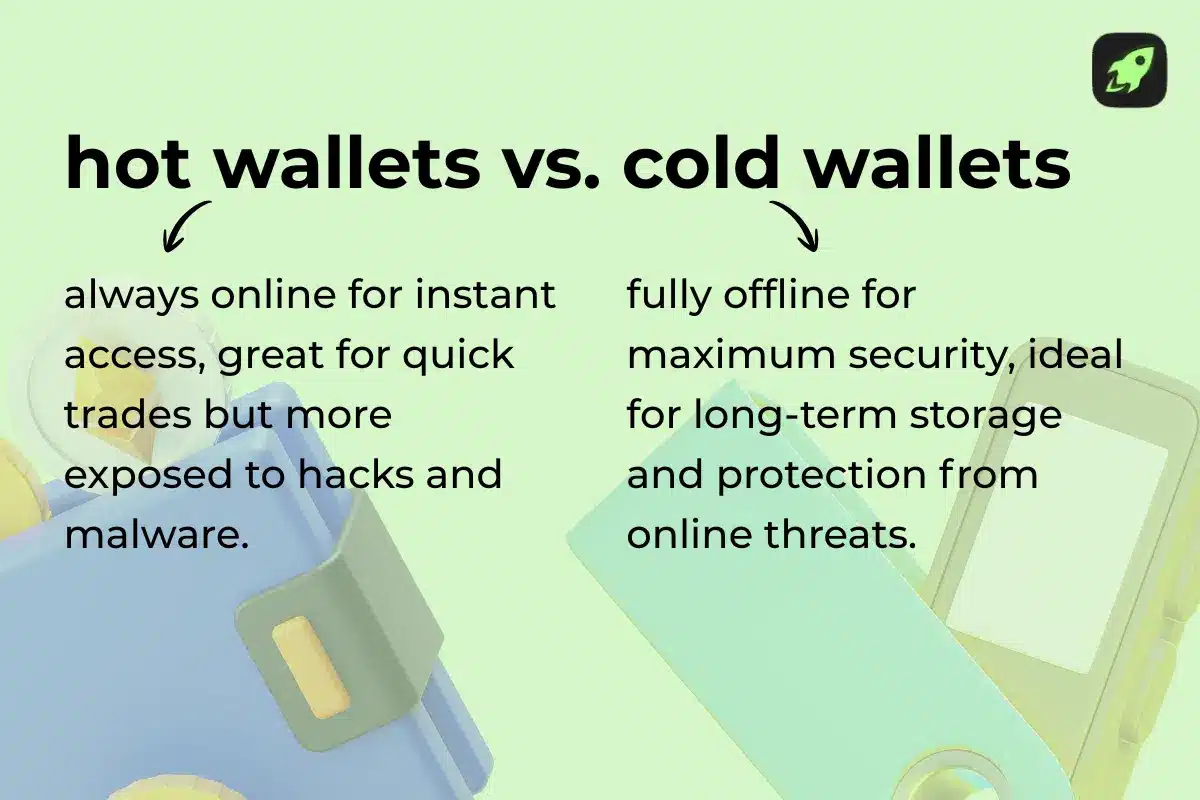
- Hot wallets stay connected to an internet-enabled device. Browser extensions and mobile apps are hot wallets. They are convenient for dApps, NFTs, and small everyday balances, but they are more exposed to malware, phishing, fake apps, and malicious approvals.
- Cold wallets keep private keys offline. Hardware wallets are the main example. They are better suited for larger balances and long-term storage. However, they still require careful transaction review. A hardware wallet can protect keys from extraction, but it cannot protect a user who confirms a bad transaction.
- Custodial wallets place key control with a third party. They may offer account recovery and support, but the user does not fully control the assets.
- Non-custodial wallets give users control over keys or signing authority. This gives more independence, but it also removes the safety net. There is usually no password reset for a lost seed phrase.
- Software wallets run on a phone, browser, or desktop. They are flexible and easy to use, but their security depends on device hygiene.
- Hardware wallets are physical signing devices. They isolate private keys and usually require physical confirmation before signing.
- Browser extension wallets are the default choice for DeFi power users. They connect easily to dApps but face browser-extension and phishing risks.
- Mobile wallets are best for everyday use, NFT viewing, QR-code signing, and simple swaps. They are less comfortable for complex DeFi workflows.
- Smart-contract wallets use blockchain-based account logic. They can support multisig, spending limits, guardians, social recovery, batching, and gas abstraction. Their risks include contract bugs, upgradeability, and network-specific limitations.
- Multisig wallets require more than one signer to approve transactions. They work well for teams, DAOs, treasuries, and high-value accounts, but setup and signer management are more complex.
Learn more: Crypto Wallet Types for Beginners
How We Picked the Best Ethereum Wallets in 2026
We ranked these wallets by security first, not hype. Each wallet had to be publicly available, actively maintained, and clear about who controls the keys. We looked at custody model, open-source code, audits, bug bounties, hardware support, recovery options, transaction warnings, network support, and real-world adoption.
We also checked practical trade-offs. A good Ethereum wallet should support mainnet, major Layer 2s, ERC-20 tokens, NFTs, and dApp access. But feature count alone was not enough. We prioritized wallets with clear security models, strong track records, and honest limitations.
Ethereum Wallets Comparison Table
| Wallet | Type | Custody model | Hardware support | Networks / standards | Cost | Best for |
| Ledger | Hardware wallet | User-controlled seed; hardware-isolated keys | Native hardware wallet | Ethereum, ERC-20, NFTs, many other assets | Paid device | Long-term holders and valuable assets |
| Trezor | Hardware wallet | User-controlled seed; hardware-isolated keys | Native hardware wallet | Ethereum, ERC-20, many other assets | Paid device | Open-source-focused cold storage users |
| Safe | Smart-contract multisig | Signer threshold controls smart account | Via signer wallets | Ethereum and major EVM networks | Free app; gas costs | DAOs, teams, treasuries |
| Rabby | Browser/mobile hot wallet | User-controlled seed/private key | Yes, through pairing | Ethereum and EVM chains | Free | EVM DeFi users |
| MetaMask | Browser/mobile hot wallet | User-controlled seed/private key | Yes | Ethereum, ERC-20, ERC-721/1155, EVM networks, selected non-EVM support | Free; service fees may apply | Broad dApp compatibility |
| Argent / Ready | Smart-contract wallet | Guardians/recovery/smart-account model | Limited / product-dependent | Starknet focus; Ethereum legacy products require current support checks | Free; network fees | Smart-account users and Starknet users |
| Coinbase Wallet / Base app | Mobile/extension hot wallet | Self-custody | Product-dependent | Ethereum, Base, NFTs, multiple networks | Free; service fees may apply | Beginners and Base users |
| Rainbow | Mobile/extension hot wallet | User-controlled seed/private key | Product-dependent | Ethereum, Optimism, Arbitrum, Polygon, Base, Zora | Free; service fees may apply | NFT and Ethereum-first mobile users |
| Trust Wallet | Mobile/extension hot wallet | User-controlled seed/private key | Limited / product-dependent | 100+ blockchains, Ethereum, ERC tokens, NFTs | Free; service fees may apply | Mobile multichain users |
| Fireblocks | Enterprise MPC infrastructure | MPC key shares and policy workflows | Not a retail hardware wallet | Ethereum and many networks; MPC infrastructure | Enterprise pricing | Institutions, funds, and enterprises |
Ranked Shortlist of the Best Ethereum Wallets
1. Ledger

Developer: Ledger
Type: Hardware wallet, cold wallet, non-custodial
Platforms: Ledger hardware devices with Ledger Live on desktop and mobile; third-party wallet pairing with tools such as MetaMask and Rabby
Custody model: User controls the seed phrase/private keys; keys are generated and stored inside Ledger hardware
Cost: Paid hardware device; Ledger Live is free software
Ledger is a strong option for users who want hardware-isolated key storage and broad Ethereum ecosystem compatibility. Ledger devices support Ethereum and many other assets, and Ledger hardware wallets are widely integrated into third-party wallets used for DeFi. Ledger’s main security advantage is private-key isolation: the signing key stays on the device rather than inside the browser or phone.
Ledger suits long-term ETH holders, NFT collectors with valuable assets, and DeFi users who want to pair a hardware signer with a hot-wallet interface. It is also useful for users who need multichain support beyond Ethereum.
The trade-off is having to trust Ledger’s hardware, firmware, supply chain, and software ecosystem. Ledger’s code stack is not fully open-source in the same way as Trezor’s. The 2023 Ledger Connect Kit exploit also showed that hardware wallets do not remove dApp and supply-chain risks. Ledger said the incident affected its Connect Kit library rather than the integrity of Ledger hardware, but users were still tricked into signing malicious transactions through affected dApps.
2. Trezor

Developer: Trezor / SatoshiLabs
Type: Hardware wallet, cold wallet, non-custodial
Platforms: Trezor hardware with Trezor Suite on desktop and web; third-party wallet integrations
Custody model: User controls seed phrase/private keys; keys stay on the device
Cost: Paid hardware device; Trezor Suite is free software
Trezor is worth considering if open-source security matters to you. On its website, Trezor emphasizes transparent, expert-reviewed code and offline key storage. Trezor Suite supports Ethereum, ERC-20 tokens, and many other assets, while hardware integrations allow users to connect to Ethereum interfaces without exposing the seed phrase on a computer.
Trezor suits users who want a hardware wallet with a stronger open-source philosophy. It also fits users who prefer a simpler long-term storage setup over daily DeFi activity.
The limitation is that hardware wallets still depend on user behavior. You must verify addresses on the device, avoid fake wallet software, protect the recovery phrase, and understand every transaction before signing. Trezor is also not as frictionless for active DeFi than a pure browser wallet.
3. Safe

Developer: Safe Ecosystem Foundation / Safe
Type: Smart-contract wallet, multisig, non-custodial smart account
Platforms: Web app and ecosystem integrations
Custody model: Funds are controlled by smart contracts and signer thresholds; no single signer has to control the whole account
Cost: Free to use at the app level, but users pay network gas and may pay fees for extra services or modules
Safe is one of the strongest Ethereum wallet options for teams, DAOs, protocols, investment groups, and users who do not want one private key to control everything. Instead of relying on a single seed phrase, Safe lets users define signer rules, such as 2-of-3 or 3-of-5 approvals.
Safe is especially notable for treasury management. Its open-source smart-account contracts have published audits, and the Safe site describes the platform as multisig infrastructure for secure self-custody and organizational transactions. Safe’s smart-contract page lists open-source contracts and more than 10 audits.
Safe suits high-value accounts, protocol treasuries, DAO operations, and advanced users who understand signer management. It is less ideal for beginners who only need a simple mobile wallet.
The main risks are smart-contract complexity, module risk, signer loss, poor signer distribution, and user mistakes during setup. A badly configured multisig can still fail. For example, if all signers are stored on the same laptop, the multisig becomes security theater.
4. Rabby Wallet

Developer: DeBank / RabbyHub
Type: Hot wallet, browser extension and mobile app, non-custodial
Platforms: Browser extension and mobile
Custody model: Self-custody based on seed phrases and private keys
Cost: Free software; users pay network gas and third-party service fees where applicable
Rabby is built for Ethereum and EVM power users. Its biggest advantage is transaction clarity. Rabby focuses on pre-transaction simulation, chain detection, and DeFi-friendly workflows. The wallet is open-source on GitHub and its official site lists audits by SlowMist and Least Authority.
Rabby suits users who interact with many Ethereum dApps, L2s, and EVM chains. It’s especially useful for people who want clearer signing prompts than classic extension wallets often provide.
The limitation is that Rabby is still a hot wallet. If your browser, operating system, or seed phrase is compromised, funds can be lost. Rabby is best used with a hardware wallet for larger balances. It is also more power-user focused than beginner mobile wallets.
5. MetaMask

Developer: Consensys
Type: Hot wallet, browser extension and mobile app, non-custodial
Platforms: Chrome-based browsers, Firefox, mobile apps
Custody model: Self-custody based on seed phrases and private keys
Cost: Free software; swaps and other services may include fees or spreads
MetaMask remains one of the most widely used Ethereum wallets because of its dApp compatibility. It supports Ethereum, ERC-20 tokens, NFTs, hardware-wallet connections, swaps, and many EVM networks. MetaMask’s official FAQ states that it is compatible with ETH, ERC-20, ERC-721, and ERC-1155 assets, while its documentation and 2026 materials list support for Ethereum, major L2s, and other networks.
MetaMask suits users who want maximum dApp compatibility. Most Ethereum apps support it, and many tutorials assume users have MetaMask installed.
The risk is that MetaMask’s popularity makes it a major phishing target. Fake sites, fake support accounts, malicious token approvals, and cloned extensions often target MetaMask users. MetaMask has a bug-bounty program and public security materials, but users still need strong operational security.
6. Argent / Ready

Developer: Ready (formerly Argent)
Type: Smart-contract wallet, account-abstraction-style wallet, mobile and browser extension depending on the product
Platforms: Ready mobile app and Ready X / Argent X browser extension for Starknet
Custody model: Smart-contract wallet with guardian/recovery design; exact setup depends on the product and network
Cost: Free software; users pay network and service fees
Argent, now operating under Ready branding in parts of its product stack, is notable because it helped popularize smart-wallet recovery. Instead of relying only on a seed phrase, Argent-style accounts use guardians, recovery kits, 2FA-style flows, and smart-contract controls.
Ready’s developer documentation says the team pioneered guardians for social recovery and has used account abstraction since 2018. Argent support materials state that its smart contracts are externally audited before deployment, with Ethereum and Starknet audit repositories available.
This wallet suits users who want smart-account features and recovery options, especially on Starknet. It is also relevant for users who dislike seed-phrase-only recovery.
The trade-off is network specificity and smart-contract risk. Argent has shifted focus over time, including prioritizing Starknet. Ethereum L1 Argent Vault users should verify current support and recovery setup before relying on it. Past vulnerability reports also show that smart-contract wallets can have serious bugs, even when teams handle them responsibly.
7. Coinbase Wallet / Base app

Developer: Coinbase
Type: Hot wallet, mobile app and browser extension, self-custody wallet
Platforms: Mobile and browser extension
Custody model: Self-custody; user controls wallet keys rather than holding assets in a Coinbase exchange account
Cost: Free software; network and service fees apply
Coinbase Wallet is a practical option for users who want self-custody with a smoother beginner experience. Coinbase describes it as a self-custody wallet where users control their crypto, keys, and data. The wallet supports crypto and NFTs, and Coinbase has increasingly tied its consumer wallet experience to Base and onchain apps.
Coinbase Wallet suits beginners who already trust Coinbase as a brand but want a wallet separate from exchange custody. It is also convenient for Base users, NFT collectors, and mobile-first users.
The limitation is that Coinbase Wallet is not the same as a Coinbase exchange account. Users still carry self-custody responsibility. Optional cloud backups and passkey-style recovery can improve usability, but they also introduce trust and account-security trade-offs. Users should understand what is encrypted, where it is backed up, and what happens if they lose access to their device or cloud account.
8. Rainbow

Developer: Rainbow Studio
Type: Hot wallet, mobile-first Ethereum wallet with browser extension
Platforms: iOS, Android, browser extension
Custody model: Self-custody based on seed phrases and private keys
Cost: Free software; network and third-party service fees apply
Rainbow is a strong Ethereum-first wallet for users who care about design, NFTs, ENS, and a smoother mobile experience. App store materials describe Rainbow as a wallet for Ethereum-based assets across mainnet, Optimism, Arbitrum, Polygon, Base, and Zora. Rainbow’s browser extension is open-source on GitHub.
Rainbow suits beginners and NFT-focused users who want a cleaner interface than power-user wallets. It also works well for users who live mostly inside Ethereum and L2 ecosystems rather than broad multichain portfolios.
The limitation is that Rainbow is still a hot wallet. It isn’t a substitute for cold storage. Its simplicity can also be a drawback for advanced DeFi users who want deeper transaction controls, more granular gas settings, or more technical signing details.
9. Trust Wallet

Developer: Trust Wallet
Type: Mobile-first hot wallet, browser extension, non-custodial
Platforms: iOS, Android, browser extension
Custody model: Self-custody based on seed phrases and private keys
Cost: Free software; users pay network and third-party service fees
Trust Wallet is one of the broadest multichain consumer wallets. Its official site describes it as an open-source, mobile-focused self-custody platform supporting millions of assets across 100+ blockchains, including Ethereum, Bitcoin, Solana, Cosmos, Optimism, and BNB Smart Chain. Trust Wallet also publishes security materials and audit references.
Trust Wallet suits mobile users who want one wallet for many chains. It is useful for users who hold Ethereum assets but also use Solana, BNB Chain, Cosmos, and other ecosystems.
The trade-off is breadth versus depth. A wallet that supports many networks may not always provide the most detailed Ethereum-specific transaction simulation or DeFi workflow. Users also need to verify they are downloading the official app, because popular mobile wallets are frequent targets for fake-app scams.
10. Fireblocks

Developer: Fireblocks
Type: Institutional MPC wallet infrastructure and digital asset custody platform
Platforms: Enterprise platform, APIs, treasury workflows, wallet infrastructure
Custody model: MPC-based infrastructure; custody setup depends on customer configuration
Cost: Enterprise pricing; not a free consumer wallet
Fireblocks is not a normal retail wallet. It belongs on this shortlist because Ethereum custody in 2026 is not only a consumer problem. Institutions, fintechs, exchanges, funds, and enterprises need policy controls, role-based approvals, audit logs, API access, staking workflows, and secure transaction operations.
Fireblocks describes its platform as MPC-based wallet infrastructure for organizations. Its materials state that MPC splits key shares so the full private key is never assembled in one place, and Fireblocks says it provides MPC-based infrastructure without acting as the custodian itself. Fireblocks also lists SOC 2 Type II, ISO certifications, C4 CCSS QSP Level 3, penetration testing, and NCC-audited cryptographic libraries.
Fireblocks suits institutions, not casual ETH holders. It is worth evaluating if a business needs Ethereum treasury operations, policy controls, exchange connectivity, compliance workflows, or wallet-as-a-service infrastructure.
The limitation is vendor dependency. Enterprise MPC platforms introduce operational, contractual, integration, and business-continuity risks. A company choosing Fireblocks should evaluate deployment model, insurance, recovery, key-share policy, exit plans, and what happens if vendor access is disrupted.
FAQ
What is the best Ethereum wallet?
There’s no single best Ethereum wallet for everyone. Hardware wallets suit long-term storage, while MetaMask, Rabby, Rainbow, and Coinbase Wallet work better for daily dApp use.
What is the safest Ethereum wallet?
A hardware wallet is usually the safer option for larger ETH balances because it keeps private keys offline. Still, no wallet is fully safe if you lose your seed phrase or sign a malicious transaction.
Are Ethereum wallets free?
Most software Ethereum wallets are free to download and use. Hardware wallets cost money, and all wallets still require network gas fees for transactions.
Is there an official Ethereum wallet?
No, Ethereum does not have one official wallet. The ecosystem supports many independent wallets, and users should choose based on custody, security, supported networks, and use case.
How do I create an Ethereum wallet?
Download a wallet only from its official website or app store page, create a new account, and back up the seed phrase offline. Never share that seed phrase with anyone.
Disclaimer: Please note that the contents of this article are not financial or investing advice. The information provided in this article is the author’s opinion only and should not be considered as offering trading or investing recommendations. We do not make any warranties about the completeness, reliability and accuracy of this information. The cryptocurrency market suffers from high volatility and occasional arbitrary movements. Any investor, trader, or regular crypto users should research multiple viewpoints and be familiar with all local regulations before committing to an investment.