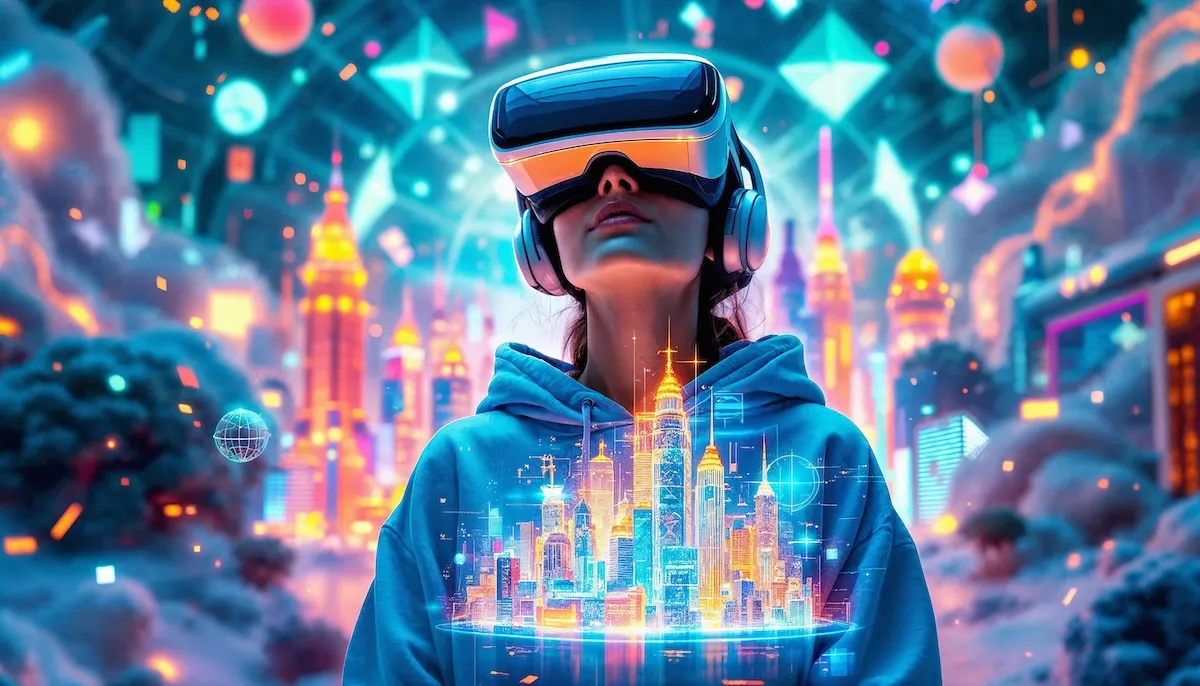
The metaverse outlook in 2026 looks very different from the bold promises that dominated headlines a few years ago. Back then, virtual worlds were pitched as the next version of the internet. Today, they feel more grounded. Less spectacle. More substance.
The metaverse hasn’t disappeared. It’s also not the all-consuming digital universe some once imagined. Instead, it’s settling into a practical role as a mix of immersive platforms, spatial computing tools, virtual economies, and social environments that blend into everyday digital life.
This change is important for NFT builders, creators, and investors. Now, long-term value is starting to stand out from the hype.
The Metaverse Market in 2026: Slower, Stronger, and More Selective
Experts estimate the metaverse economy will reach $120 to $150 billion in 2026, mainly because of gaming, enterprise XR, digital commerce, and creator platforms. More people are joining in, but growth isn’t the same everywhere. About a quarter of internet users worldwide now use metaverse-like experiences each week, even if they don’t use that term.
Gaming still gets the most attention. Virtual collaboration tools are also popular. Retail and digital fashion are steady, but virtual real estate speculation, which used to be a big story, has slowed down a lot.
This slowdown has actually helped. Now, investment goes to platforms with active users, creators, and real activity. Projects that only offer empty land or unclear plans are having a hard time staying important.
Virtual Worlds Are Maturing, Not Expanding Endlessly
Early metaverse platforms focused on scale. Bigger maps. More land. Louder partnerships. In 2026, priorities look different.
Platforms like Decentraland and Roblox are still important, but they don’t represent the whole space anymore. Now, they share the stage with many specialized virtual worlds for gaming, social events, education, or brand engagement.
People now care more about making platforms work together than just making them bigger. Shared avatar standards, cross-platform identities, and portable NFTs are starting to seem possible, even though full compatibility isn’t here yet.
Brands have changed their approach too. Instead of big, flashy launches, they now focus on smaller, ongoing experiences. Digital fashion stores, token-gated communities, and NFT loyalty programs work better than one-time marketing events. Users also don’t stick around for empty branded spaces with nothing to do.
NFTs as Infrastructure, Not Speculation
In 2026, NFTs have a quieter but more important role in the metaverse. They serve as access keys, identity markers, licensing tools, and programmable assets, instead of just being used for quick trades.
Creators use NFTs to earn money from experiences, digital wearables, music, and community memberships. Royalties are paid out automatically, and ownership is clear. This reliability helps build trust, especially after years of learning what works.
The ‘create-to-earn’ model has replaced the old play-to-earn approach. Now, people earn by building worlds, designing assets, hosting events, or managing communities. Some do well, many don’t, but this model seems more sustainable than rewards based on token inflation.
Regulation is still inconsistent. Clearer rules in some parts of Europe and Asia are bringing in more institutional interest, but unclear policies in other places are slowing global growth. This hasn’t stopped innovation, but it has changed how teams organize their projects.
Social Life, Entertainment, and Digital Identity
Entertainment is still a main part of the metaverse. Virtual concerts, esports tournaments, and live events by creators attract millions of people on different platforms. These events feel both global and personal.
Digital identity is now at the heart of these experiences. AI-generated avatars can change based on mood, setting, and social context. Digital fashion is changing quickly, with virtual outfits now inspiring real-world trends instead of just copying them.
This freedom brings new challenges. Issues like identity theft, moderation, and making sure content is real need better solutions. Platforms that ignore these problems lose their communities fast. Those that build trust keep loyal users, even if they don’t grow quickly.
Work, Education, and Enterprise Use Cases
Enterprise adoption doesn’t make headlines, but it delivers consistent results. Companies use immersive simulations for training, safety drills, and product design. Error rates drop. Skill retention improves. Costs decline over time.
Platforms such as Microsoft Mesh offer spatial meetings and shared workspaces, but they are used alongside existing tools, not as replacements. Most employees don’t want to wear a headset all day, so short, focused sessions are most effective.
Digital twins are becoming more popular. Cities, factories, and infrastructure projects use virtual copies for planning and operations. These systems aren’t flashy, but they help save time and money.
Hardware, AI, and Spatial Computing in 2026
Hardware is no longer experimental, but it still has some challenges. Headsets are lighter, displays are clearer, and battery life is better. Each year, more than 40 million XR devices are shipped worldwide.
Devices like Apple Vision Pro push spatial computing into mainstream conversations, even if price limits mass adoption. The bigger impact comes from design influence. Voice input, gesture control, and mixed reality interfaces spread across the industry.
Generative AI is changing how virtual environments are made. Worlds are built faster, NPCs act more naturally, and content can be produced quickly. This leads to both more creativity and more clutter. Now, platforms compete on how well they organize content, not just how much they create.
Blockchain mostly works behind the scenes now. Users are more interested in whether ownership works as it should, rather than which blockchain is used.
What’s Holding the Metaverse Back
Progress has its challenges. Fragmented platforms still slow down network effects. As more spatial data and biometric information is collected, privacy concerns are growing. Economic uncertainty also makes it harder to get speculative funding, especially for consumer-focused worlds.
The word ‘metaverse’ now has some negative associations. Many teams avoid using it, even though they are building immersive, connected systems that match the original idea. This change shows how the space has evolved.
Looking Past 2026
Beyond 2026, the metaverse will be less noticeable and more integrated into daily life. Virtual ownership will be part of games, apps, and social platforms without much attention. NFTs will become the standard for digital property. People will stop thinking about ‘entering’ virtual worlds and will just move between different experiences.
Consolidation is ongoing. A few platforms get most of the attention, while smaller ones survive by focusing on specific communities. The most successful teams are those that understand culture, incentives, and trust.
Final Thoughts
In 2026, the metaverse feels realistic. It isn’t perfect, and it’s still fragmented, but it is useful.
This is good news for the NFT community. Sustainable growth comes from real ownership, strong communities, and reliable tools that work in the background. The next phase will reward builders who stay focused after the hype is gone, not those who make the most noise.