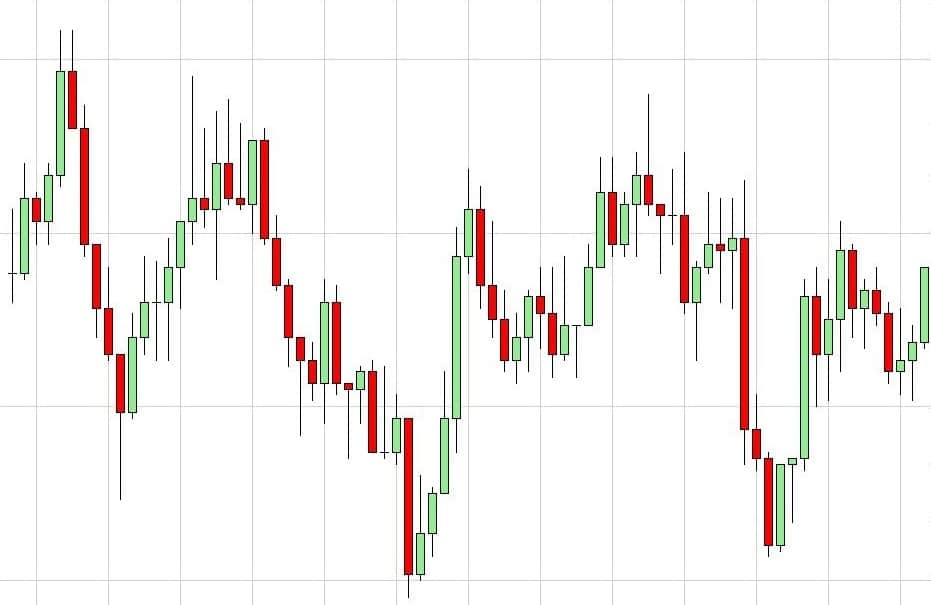
Sideways markets can be frustrating for traders. Prices stall and big trends fade away. Range trading gains prominence in these situations—when price bounces between support and resistance instead of moving in one direction. These conditions still offer opportunities if you can buy near the floor and sell near the ceiling, but it’s only profitable with clear discipline and strict rules.
This guide explains how range trading works, how to identify a reliable trading range, and how to plan entries, exits, and stop-losses. You’ll learn the simple rules to follow, how to avoid common traps, and build a repeatable range trading strategy that protects your capital.
Table of Contents
What Is Range Trading in Crypto?
Range trading is a powerful trading strategy used when price moves sideways inside a defined range rather than trending in a particular direction. During these periods, “trading ranges” form between support and resistance levels, creating a horizontal corridor on the price chart. Range traders aim to buy near the support level and sell near resistance within this corridor. Some also short at resistance and cover near support.
Remember that price rarely respects exact numbers, and so these boundaries work as zones rather than precise levels. And no range lasts forever: range breaks eventually happen, which is why experienced traders treat these levels as probabilities, not guarantees.
How Does Range Trading Work?
Range trading usually follows a simple, repeatable process. First, you identify sideways markets where price moves inside a range instead of trending. Next, you mark support and resistance levels that form the upper and lower boundaries of that range. Finally, you can plan entries near one edge of the range and exits near the other, placing protective stops just outside the boundaries.
Learn how to read crypto charts: Chart Patterns Cheat Sheet
We’ll cover how to start range trading crypto in detail below, but for now, it’s important to understand what factors influence range trading, and why.

How to Get Free Crypto
Simple tricks to build a profitable portfolio at zero cost

Market Conditions for Range Trading: When Conditions Favor a Trading Range
Range trading works only in sideways, non-trending markets. Let’s figure out how to spot a true trading range, understand what’s happening inside it, and judge whether its conditions are tradable or risky.
Recognizing A Sideways Market vs. A Clear Trend
In sideways markets, highs and lows form at similar levels. Price oscillates instead of making consistent higher highs or lower lows. Candles overlap. In short: momentum stalls. A flat or gently sloped moving average plus choppy price action signals a horizontal range.
Read more: How to Read Candlesticks on a Crypto Chart
Horizontal Range and Consolidation as “Resting Phases”
Most ranges appear after a strong trend. Price pauses inside a horizontal range or consolidation while volatility cools. This is inventory balancing—buyers and sellers test both sides. The result is a box with repeated reactions at highs and lows.
Accumulation or Distribution Phases Inside Ranges
An accumulation phase often forms after weakness, with buyers absorbing supply near the bottom. A distribution phase follows strength, where sellers repeatedly push price down near the top. Some ranges also form during re-accumulation, where price pauses during an ongoing uptrend before continuing higher.
Volatility and Liquidity: When Ranges Are Tradable vs. Dangerous
Range trading needs enough price movement to justify its risk and trading fees. Wider ranges usually offer larger profit potential but take longer to complete cycles, while tight ranges produce faster but smaller trading opportunities. In other words, if the box is too tight, your profits will shrink. Meanwhile, if volatility is extreme, expect fakeouts and sharp wicks. Liquidity matters too, since thin order books can increase slippage. Deeper markets improve execution and make successful range trading more realistic.
Using Trading Volume And A Quick Order Book Glance For Context
Trading volume shows you if people are participating. Steady volume supports a healthy range. Sudden spikes near edges can signal defense or pressure building. A quick order book check reveals gaps or shallow depth. Combine volume and liquidity checks before entering. If conditions look unstable, skip the trade.
When Not to Range Trade: News Spikes, Thin Altcoins, Extreme Whipsaw
Even a strong range trading strategy fails in unstable conditions. Here’s a quick look at some red flags:
- Scheduled Macro Catalysts (CPI, Jobs, FOMC, ETF Rulings): These all spike volatility, trigger range breaks, and distort price movement. Wait for the structure to stabilize.
- Listings or Delistings (e.g. Binance, Coinbase): They create chaotic price action and disrupt support and resistance levels. Let a definite range rebuild before you trade.
- Regulatory Headlines: They can instantly shift market sentiment and erase liquidity, making horizontal markets unreliable.
- Thin Altcoins and Low-Liquidity Pairs: Wide spreads, shallow order books, and slippage often kill profits that involve multiple trades.
- Extreme Whipsaw After Large Moves: Rapid reversals can rapidly trigger stop-losses over and over. Wait for consolidating markets and cleaner price action.
- Obvious Trends: Clear bull markets, or a definitive bear trend favor trend traders, not range traders.
Core Building Blocks: Levels, Lines, and Range Anatomy
Before you trade a range, make sure you understand all the terminology. These basics help range traders plan consistent entries and exits.
Support Level: The Floor Where Buyers Step In
The support zone where buying pressure slows or stops further price falls. Range traders plan entries as current price approaches this support price and place stop-loss orders just below it. If support breaks clearly, it often turns into resistance and signals range failure.
Resistance Level: The Ceiling Where Sellers Step In
Resistance levels form where sellers push price down again and again. Traders often sell or short near this zone. Like support, resistance acts as an area rather than a single line. But if price holds above resistance, it can flip into a new support and reshape the trading channel entirely.
Range High, Range Low, and Drawing The Box
The range high and range low create the trading corridor you follow. You draw them by connecting repeated swing highs and lows on the price chart. Ignore random spikes and focus on levels with multiple reactions. Higher timeframe ranges usually provide stronger trading opportunities.
Midline and Mean Reversion: The Center of Gravity
Most trades happen near range edges, not the middle. The center acts as a balance point where price often drifts back toward average levels. Traders may secure profits here or tighten exit points if momentum shifts.
Price Action, Retesting, and Why Multiple Touches Matter
Successful range trading depends on repeated reactions. Clear rejections at support and resistance confirm the trading range. Retesting helps confirm strength. Multiple touches show the crypto market respects the level and increase reliability.
Range Duration: How Long Do Ranges Last?
No range is forever. They can last hours, days, or weeks depending on volatility and market sentiment. A range usually ends when price closes repeatedly outside the boundaries with rising trading volume, signaling a breakout or breakdown.
How to Spot a Tradable Range: Step by Step
Finding a tradable range means filtering for clean structure, workable liquidity, and enough price movement to beat trading costs. This quick list helps you locate sideways markets and avoid messy setups.
Choosing a Timeframe That Fits Your Schedule (1H vs. 4H vs. Daily)
Pick a timeframe you can realistically monitor. Shorter charts like 1H show more signals, but that also brings a lot of noise. The 4H timeframe is often cleaner. Daily charts produce stronger, slower ranges. Just stick to one main timeframe and use larger ones only for context.
Step 1: Identify Repeated Highs and Lows, Ignoring Small Noise
Look for at least 2–3 clear reactions at similar highs and lows. Focus on strong price action where candles reject levels and move away. Ignore small spikes and random wicks.
Step 2: Draw your Support Level and Resistance Level
Mark the support levels and resistance levels that have repeated reactions on the price chart. Extend these zones forward and adjust them as new touches appear. Think in areas, not specific numbers.
Read more and navigate crypto charts with ease: Top Chart Patterns for Crypto Trading
Step 3: Confirm a Horizontal Range with a Flat‑ish Moving Average
Use moving averages as a quick double-check. When price crosses a flat average repeatedly, it’s a good sign for range-bound trading. If the average slopes strongly, the market is likely starting to trend.
Step 4: Check Trading Volume and Volatility for “Too Wild” Moves
Make sure the range has enough price movement to create profitable swings without becoming chaotic. Sudden volume spikes near boundaries can signal trading breakouts, while stable activity can support multiple small trades inside the range.
Step 5: Decide If the Range Is Clean or Messy (Avoid Low-Liquidity Chop)
A clean channel shows strong reactions at the edges and smooth moves between them. Messy ranges show frequent boundary breaks, mid-range chop, and whipsaw movement. Traders prefer clean structure because it improves successful range trading.
Planning Your First Range Trade
Now that you’ve drawn your range, it’s time to turn it into a fully-fledged range trading strategy: where to enter, where to exit, how to protect the trade, and how to size it so risk stays controlled.
Defining an Entry Point Near Range Low and an Exit Point Near Range High
Plan a basic long position by buying as price approaches the range low and selling near the high. Don’t try to catch the exact bottom or top—use entry areas instead of single prices to handle normal price swings and spreads. Place your invalidation point just below the range low so your risk stays clear. Stronger setups usually show repeated reactions or confirmation that buyers are stepping in.
Picking a Stop-Loss Beyond Support and a Take-Profit Inside Resistance
Place stop-loss orders just outside the boundary you trade against. Range trading fails when price holds beyond it. Just make sure to leave room for volatility and slippage. Set take-profit orders slightly inside the opposite edge of the channel to improve fill probability. For shorts, reverse this logic. If price accepts outside the range after a break and retest, exit quickly.
Position Sizing and Risk Percentage (Keeping Losses Survivable)
- Choose a fixed risk per trade, usually 0.5%–1% of your account balance.
- Measure stop distance from entry to invalidation beyond support and resistance.
- Calculate size: account risk ÷ stop distance. Round down if needed.
- Check liquidity and order book depth before entering.
- Use limit orders for entries, stop orders for protection, and targets inside the opposite boundary.
- Recalculate if entry or stop changes. Never widen stops to chase trades.
- Record each trade plan and review performance regularly.
Risk-Reward Ratio: Why Some Ranges Aren’t Worth Trading
The risk-reward ratio turns range trading geometry into real numbers. Risk equals entry-to-stop distance. Reward equals entry-to-target minus trading costs. Many traders prefer setups near 2:1 or better. If the math fails, skip the trade or adjust your plan.
Choosing Between a Limit Order and Market Order at the Edge
- Limit order: An order to buy or sell at a specific chosen price. It gives you better price control and usually lower slippage, but the trade might not fill if price never reaches your level.
- Market order: An order that executes instantly at the best available price. It guarantees the trade happens, but you may pay higher spreads, trading fees, and slippage.
Successful range traders prefer limit orders near range boundaries and use market orders only for urgent exits or fast breakout moves.
Breakouts, Fakeouts, and Traps at Range Edges
When momentum builds or liquidity shifts, price can break support or resistance, and the range is over. This section shows how to separate real breakouts from traps and how to react safely.
What Is a False Breakout (Fakeout) and Why It Happens
A false breakout happens when price briefly moves outside support and resistance, triggers trades or stop-losses, then returns inside the range. These moves often come from stop hunts, thin liquidity, or sudden reactions to news.
How to Spot a Real Breakout vs. a Fakeout
Focus on candle closes beyond the boundary, not just wicks. Real breakouts usually show follow-through and hold after a retest on the new side. Quick reversals back inside the trading range often signal a fakeout.
Volume Confirmation: The Key Signal
Strong trading volume helps confirm breakouts. Rising participation supports sustained price movement. Weak or fading volume often signals failed breaks or traps.
Bull Traps and Bear Traps at Range Boundaries
A bull trap is when price breaks resistance, attracts buyers, then reverses. A bear trap is when price falls below support and quickly rebounds. Waiting for confirmation helps traders avoid chasing false moves like these.
Indicators and Tools
Technical indicators help confirm range trading setups, but they can never replace structure or risk control. Use a small toolkit to measure volume and momentum indicators, volatility, and participation around support and resistance.
Read more: Best Indicators to Use for Crypto Trading
Using RSI or Simple Oscillators at Range High / Low
Indicators like RSI and other oscillators measure momentum strength. Traders watch for weakening momentum near resistance and strengthening momentum near support. Overbought or oversold signals alone don’t confirm reversals. They work best when combined with clear price action and repeated range reactions.
Bollinger Bands and ATR for Range Width and Volatility Context
Bollinger Bands show when price stretches toward range extremes. A touch near support or resistance suggests overextension, not guaranteed reversal. If ATR (Average True Range) approaches the height of the trading range, price becomes unstable and harder to trade. ATR helps place stop-losses at realistic distances.
Moving Averages to Confirm “Sideways vs. Trending”
Moving averages help identify market direction. A flat moving average with frequent price crossings supports sideways markets. A steeply sloped average with price holding on one side signals trending conditions where range trading works poorly.
VWAP and OBV as optional volume aids
VWAP (Volume Weighted Average Price) shows the average trading price weighted by volume, helping identify fair value during a session. Price above VWAP suggests buyer strength, while price below signals selling pressure. OBV (On-Balance Volume) tracks cumulative volume flow to show if participation supports price direction. Rising OBV during resistance tests may support breakouts, while flat or falling OBV can warn of weak moves.
Risk Management for Range Traders
Risk management keeps range trading sustainable. Without guardrails, costs and volatility can quickly erase your profits.
- Trading Costs Add Up: Frequent trades increase maker/taker fees, spread, and slippage. Tight ranges can lose profitability fast.
- Liquidity Changes Across Time: Crypto trades 24/7, but off-hours often bring wider spreads and worse execution.
- Use Leverage Carefully: Leverage magnifies losses. Beginners usually stick to spot trading or very low leverage until consistency improves.
- Set A Maximum Daily Loss: Predefine a stop point, such as −2R or a small account percentage. Stop trading once it’s reached and avoid revenge trading.
- Track Every Trade: Record entry, stop, target, position sizing, fees, slippage, and timing. Regular reviews help identify costly patterns and improve execution.
Comparing Range Trading to Other Approaches
| Strategy | Goal | Market Condition | Effort | Main Risk |
| Manual Range Trading | Capture edge-to-edge swings | Sideways ranges | Medium (plan and monitor) | Fakeouts, trading costs, slippage |
| DCA (Dollar-Cost Averaging) | Gradual accumulation | Any, especially choppy markets | Low | Opportunity cost, no exit strategy |
| Trend-Following / Breakout Trading | Ride strong directional moves | Trending, volatility expansion | Medium–High | Whipsaws, false breakouts |
| Two-Way Grid / Grid Bot | Automate buy-low, sell-high cycles | Sideways or mild trends | Low after setup | Strong trends draining capital, fees and spreads |
| Swing Trading | Capture multi-day price swings | Mixed, directional bias | Medium | News shocks, overnight exposure |
| Scalping | Capture very small price moves frequently | High liquidity, fast execution | Very High | Fees, spreads, execution mistakes |
Beginner Tip: DCA suits passive exposure. Manual range trading on higher timeframes helps build structure and execution skills before using automation or advanced strategies.
Is Range Trading Right for You?
Use this quick checklist:
- Do you have time to monitor charts?
1H requires active watching. 4H or daily charts suit slower schedules. - Are you patient and rules-driven?
Range trading often means many small wins and strict discipline near boundaries. - Do you want range trading as a side strategy?
Many traders pair it with long-term HODL or DCA and use a separate capital bucket. - Are you willing to practice first?
Paper trading and backtesting help you test entries, stops, and exits safely. - Can you control risk and avoid leverage early?
Many beginners risk 0.5%–1% per trade and stop trading after daily loss limits.
FAQ
Is range trading good for complete beginners?
Yes, if you start with small-size or paper trading. Focus on one timeframe, simple rules, and strict stop-losses to avoid fakeouts and overtrading.
Which coins and timeframes are best for practicing?
Start with high-liquidity coins like BTC and ETH on 4H or daily charts. They offer cleaner support and resistance and more reliable fills.
How often do ranges break and what do I do then?
Every range breaks eventually. If price holds outside the boundary, exit the trade and reassess the new market structure.
Can I use trading bots (Grid Bots, DCA Bots) for ranges?
Yes, grid bots automate buy-low and sell-high cycles, while DCA bots help with steady accumulation. Always set clear boundaries, risk limits, and shutdown rules for breakouts.
What metrics should I watch? (Win Rate, Profit Factor, Drawdown)
Track win rate, profit factor, and maximum drawdown to measure performance. Also monitor your account balance trend to confirm long-term progress.
Disclaimer: Please note that the contents of this article are not financial or investing advice. The information provided in this article is the author’s opinion only and should not be considered as offering trading or investing recommendations. We do not make any warranties about the completeness, reliability and accuracy of this information. The cryptocurrency market suffers from high volatility and occasional arbitrary movements. Any investor, trader, or regular crypto users should research multiple viewpoints and be familiar with all local regulations before committing to an investment.